OVERVIEW
When the City of Kingston, Ontario, was presented with an opportunity to partner in the development of a multi‑sport stadium, city leaders understood the decision would carry lasting implications for the community. With strong public interest, deep neighbourhood ties to the site, and varying opinions about the project’s impact, Kingston knew that a traditional engagement approach would not be enough.
Instead, the city launched one of its most comprehensive and transparent public engagement initiatives to date — one that prioritised visibility, responsiveness, and follow‑through at every stage. By combining digital tools with extensive in‑person outreach, and committing to rapid, public reporting of what it heard, Kingston ensured residents could clearly see how their voices informed both decision‑making and next steps. This approach not only delivered exceptional participation, but also laid the groundwork for a new, community‑driven visioning process for the site and helped establish a repeatable model for trust‑centred engagement across the city.
“This was a high‑intensity engagement project with the potential to impact trust between the community and the city. The most significant achievement was strengthening that trust through responsive and transparent reporting back — treating all feedback with equal seriousness and showing it wasn’t a formality.”
Jen Pinarski
Manager of Communications and Public Engagement, City of Kingston
SITUATION
A high‑stakes decision with deep community impact
The proposed multi‑sport stadium promised increased access to indoor recreation and the potential to host competitive sports, but it also raised significant concerns among residents. The site is located in a dense neighbourhood with limited green space, long‑standing community use, and deep historical and cultural importance for nearby residents and user groups.
The challenge was compounded by a lack of trust. Some community members felt they had not been heard in past processes and were skeptical that public feedback would meaningfully impact the outcome. With a compressed timeline and heightened scrutiny, there was a real risk that a poorly executed engagement could further damage public confidence.
For Kingston’s communications and engagement team, the goal was not simply to collect feedback. The city needed to demonstrate — visibly and consistently — that community perspectives were being acknowledged, weighed, and shared transparently with decision‑makers.
“Our goal is always to hear from the people who are affected by a decision, or who care about it, and meet them where they are,” said Jen Pinarski, Kingston’s manager of communications and public engagement.
SOLUTION
A proactive, hybrid approach to transparent engagement
Kingston designed its approach around a core principle: Trust is built through openness and responsiveness, not just participation volume.
Rather than starting with a survey that could imply pre‑determined outcomes, the city began with pre‑engagement — opening a public digital Q&A that invited residents to ask anything they wanted to know about the proposal. Those questions helped shape the engagement itself, directly informing survey design, public communications, and in‑person discussions.
Using Get Involved Kingston, powered by Granicus’ Sentiment & Feedback solution (EngagementHQ), the city implemented a truly hybrid engagement model that included:
- Digital Q&A and feedback tools
- Surveys and FAQs shaped by resident questions
- Targeted newsletters and social outreach
- Frequent on-site pop-up sessions and drop-in meetings
- Focused conversations with community groups and frequent site users
Crucially, Kingston committed to answering every question publicly and to regular reporting throughout the process, rather than waiting until the end to summarise results. Granicus reporting and analytics tools allowed staff to centralise feedback from both digital and in‑person channels, quickly identify themes, and share up‑to‑date insights with both the public and City Council.
“The way to rebuild trust was to report back as quickly as we could, showing people not just that we were listening, but exactly what we were hearing,” Pinarski said. “Throughout the project, we responded to all community questions — more than 286 in total. This degree of transparency represented a major shift from traditional static FAQs.”
The city also used demographic and geographic analysis to validate participation. By mapping where responses were coming from, the team could confirm that feedback reflected those most impacted by the project — not just the most vocal participants.
That insight served two purposes: it strengthened confidence in the data internally and helped demonstrate to the public that the engagement process was representative.
RESULTS
Turning feedback into action and a clear path forward
The multi‑sport stadium engagement achieved exceptionally strong reach and participation for a municipal project, particularly given the short timeline and emotionally charged topic:
- More than 1,170 completed surveys, representing 150% higher participation than other projects open during the same timeframe
- 350 new registered participants, expanding Kingston’s engaged audience
- 286 public questions answered openly
- 9,459 project page visits during the engagement period
- 1,295 newsletter subscribers seeking ongoing updates
- Approximately 150 residents attended 4 in-person sessions, contributing more than 700 written comments
Beyond the metrics, the engagement produced lasting impact. Feedback collected through this process directly informed City Council’s decision to initiate a community‑led visioning project for the site — allowing residents to help shape its long‑term future based on what they value most, including green space, heritage, and accessibility. “Through this multi-sports stadium exercise, we have a really good sense of what the community values about the site,” said Pinarski. “So now, we look at what we can do with that aging infrastructure that will help build Kingston for the future.”
The engagement also prompted the city to begin developing a clearer municipal framework for evaluating unsolicited development proposals, improving transparency for future opportunities.
Internally, Kingston has since applied key practices from this project — including rapid reporting and real‑time insight sharing — to other high‑profile initiatives. These approaches complement the city’s broader engagement efforts, reinforcing that transparency is not a one‑time effort, but an ongoing commitment.
“The engagement process for the Multisport Stadium Opportunity project raised the bar for transparency and adaptability,” said Jennifer Campbell, commissioner for community services in Kingston. “It was clear that community input was not a check-the-box exercise, but central to building — and in some cases rebuilding — trust with the neighbourhood, site users, and the broader community.”
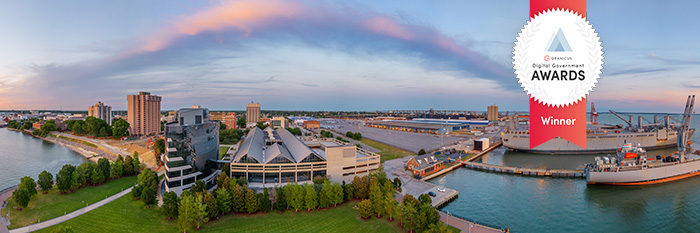
This story highlights the hard work and innovation that earned the City of Kingston recognition as a winner in the 15th Annual Granicus Digital Government Awards, honoring exceptional achievements in digital government.