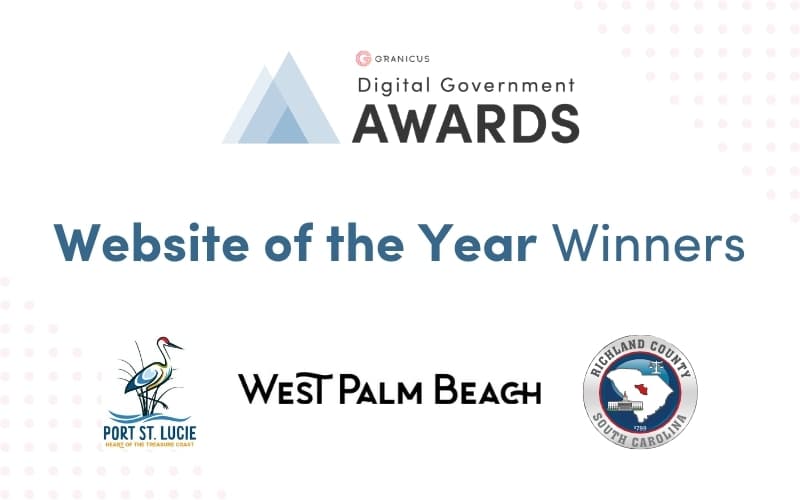
The Granicus Digital Government Award for “Website of the Year” celebrates three organizations that redefined what a modern digital government experience can be. Each winner demonstrates how thoughtful design, resident‑driven strategy, and powerful govtech can transform a website into a full-service platform for the public.
Why they won
Three government organizations stood out this year for doing more than launching a new website. They rethought how residents experience their local government online, and the results speak for themselves.
City of Port St. Lucie, Florida
Port St. Lucie is one of the fastest‑growing cities in the U.S., adding more than 53,000 new residents since 2020. This growth brought rising expectations for accessible, transparent, and user‑friendly digital services.
The city responded with a comprehensive redesign grounded in resident behavior and direct feedback. The website was rebuilt around intuitive navigation, ADA compliance, and rapid content updates.
“Our website redesign reflects the City of Port St. Lucie’s commitment to delivering accessible, user‑focused digital services that meet the needs of our community,” said Patricia D’Abate, Port St. Lucie’s webmaster. “The project has significantly improved residents’ ability to find information, complete tasks online, and stay connected with their local government.”
The overhaul went far beyond refreshing visuals; the city used resident behavior, data, and direct feedback to rebuild navigation, surface high‑demand services, and simplify complex information. The result is a website that reduces friction, strengthens transparency around budgets and city priorities, and supports rapid updates across departments. It’s a future‑ready foundation that will evolve alongside a booming city.
As described by Kit Sullivan, UX design manager at Granicus, “Port St. Lucie’s website stands out with clear, intuitive navigation and thoughtfully integrated tabbed content that elevates the user experience. The clean, engaging design makes it easy for residents to quickly find the information they need, reinforcing the city’s commitment to accessibility and ease of use. What makes Port St. Lucie exceptional is how deeply they listened to their community, with every design choice reflecting real resident needs.”
Richland County, South Carolina
Richland County‘s redesign represents one of the most ambitious digital transformations in this year’s awards. The project replaced a decade‑old website that residents described as difficult to navigate, outdated, and not mobile‑friendly.
“A modern website is the foundation of a connected county, serving as a critical tool for streamlining service delivery and fostering a more informed and engaged public,” said Aubrey Jenkins, systems analyst and project lead for Richland County. “The Richland County Government website redesign is a major part of reaching the strategic goal of positive public engagement through effective, accessible communication and convenient access to services.”
After months of research, surveys, interviews, and analytics review, the county partnered with Granicus to build a platform that is visually modern, responsive, and fundamentally resident‑centered.
The project reorganized content around resident needs, implemented plain language, and moved 8,000+ PDFs to archive in favor of live pages and responsive forms. The bold commitment to user-centered digital services resulted in increased page views and return visits, as well as decreased help desk tickets (dropped to nearly zero).
“Richland County’s website shines with a clear, intuitive homepage that puts residents first,” explained Sullivan. “By prominently highlighting services through the service finder and top tasks areas, the city demonstrates a strong commitment to making it easy for residents to access the tools they need and engage confidently with city services. The site reflects the county’s genuine, organization‑wide commitment to building a website that reflects its values and vision.”
City of West Palm Beach, Florida
The City of West Palm Beach set out to build a website that genuinely meets the needs of the people who rely on it every day. As global interest continued to grow, the city recognized the importance of a digital platform that is dependable, accessible, and easy to navigate for both residents and visitors.
Using all the capabilities of Service Cloud, WPB.org now operates as a true digital ecosystem — seamlessly connecting residents to services, real‑time updates, public records, and emergency information through a modern interface that adapts to any device.
“The City of West Palm Beach’s award-winning website reflects our commitment to accessibility, transparency, and modern, user-centered service,” Kathleen Joy, director of communications, said. “Since launch, WPB.org has served more than 1.3 million users, enhanced access to essential and emergency information through tools like the switch-ready Hurricane Homepage, and earned a 94.8 Quality Assurance score — well above the national government benchmark — demonstrating measurable impact and reliability.”
The city’s commitment to daily accessibility audits ensures the site remains compliant, usable, and trustworthy.
“West Palm Beach’s website is notable for its bright, engaging homepage designed to make information easy to access for residents,” said Sullivan. “The prominent search bar provides an immediate and welcoming entry point to city services, while the playfully designed top tasks offer a clear, structured path for exploring key information. Their switch‑ready hurricane homepage shows an incredible commitment to public safety and resident experience — a shining example of a website serving as both a daily resource and an emergency‑ready response tool.”
Insights and trends from winning websites
Award-winning government websites share more than good design. They reflect real decisions made by real teams about how to organize information, who owns what, and how to keep a site useful long after launch day. Across this year’s winners, a handful of clear themes emerged.
Cleaner sites reduce resident frustration and staff workload
A consistent theme across the winners is that everyone benefits when information is easier to find. Teams focused on reorganizing content around real resident needs — simplifying navigation and removing old or redundant pages. These changes cut down on support tickets, helped people self‑serve more often, and made routine updates faster and less painful for staff. It turns out that fewer clicks and clearer words are some of the most impactful “digital improvements” a government can make.
Accessibility is central to design
All three winners treated accessibility as something ongoing, not a box to check. Whether it was Port St. Lucie’s 92% WCAG compliance, Richland County’s massive cleanup of PDFs and broken links, or West Palm Beach’s daily accessibility audits — the message is clear: Accessibility is key, not just for the sake of compliance, but to create websites that are easier to use for everyone.
Mobile-first design is non‑negotiable
Residents are no longer browsing from laptops. They’re looking up meeting times on their phone in a parking lot, paying a bill while commuting, or checking emergency info seconds before a storm hits. Winners built their sites with mobile users in mind, making key tasks simple on small screens — improving user experience significantly.
Emergency communication patterns are a “must-have”
West Palm Beach’s “Hurricane Homepage” stands out as a model that other communities can learn from. A switch‑ready emergency layout means less scrambling during a crisis — and residents get live updates, closures, and safety information in a clean, predictable format. This approach is gaining traction because it makes emergency planning part of the everyday website experience, not a last-minute scramble.
Strong websites reflect strong internal processes
Behind every award-winning website was a team that clarified ownership, cleaned up their content workflows, and standardized how departments submit updates.
In many cases, the technology wasn’t the hardest part; coordinating people, expectations, and timelines was. This year’s winners showed that better internal coordination is often the hidden engine behind a better public-facing experience.
Winners didn’t treat their sites as one‑time redesigns. They built systems that make updates fast, allow cross-department contributors to collaborate, and give staff the flexibility to quickly add content as needs change. The shift from “project” to “practice” keeps websites accurate, relevant, and trusted over time.
Websites are the gateway to the entire digital government experience
In every winning example, the website was the front door to digital services, permitting, engagement, records, and emergency information. A strong website made everything else easier to use and understand.
The “Website of the Year” winners show what’s possible when governments embrace resident‑centered design, modern technology, and continuous improvement. Port St. Lucie, Richland County, and West Palm Beach each built platforms that are visually compelling, operationally transformative, deeply aligned with community needs — and, of course, award-winning.
Learn more about all the winners of this year’s Digital Government Awards.