BLOG
A place for everyone: How North Tyneside Council built a platform to raise all voices

A community is the sum of its residents, the totality of their individual needs, their hopes, and their dreams. In its purest form, it’s a perfect circle, a place where everyone is not only connected to each other, but with those that serve them. But it’s not always easy for organisations to capture individual voices and views, a point that renders the circle of community not simply imperfect, but incomplete.
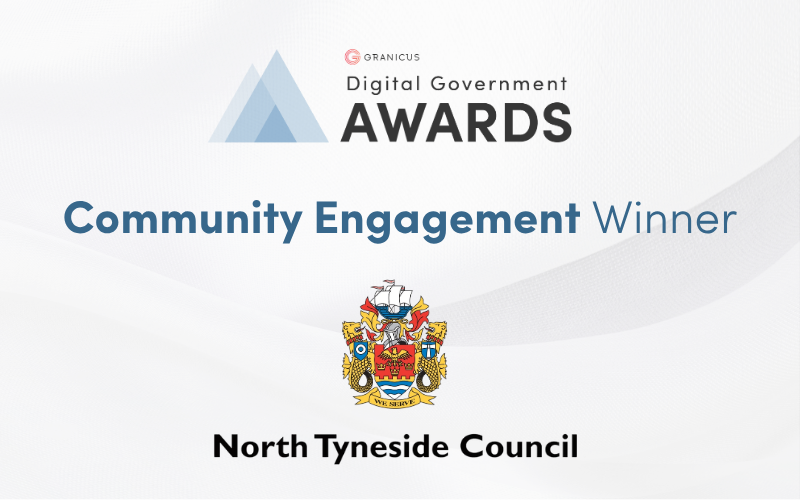
As we’ll see, this year’s UK winner of the Community Engagement category of our Granicus Digital Government Awards — an honour given to an organisation for their creative use of digital tools to inform and engage — has used technology to change how it interacts with its residents. Indeed, for the North Tyneside Council Engagement Team, technology has provided not just a means of transforming its consultation process, but an opportunity to show how individual participation and feedback plays a real part in shaping council decisions — or, in other words, a way of reinforcing that all-important circle of community.
In their entry submission for this category, the team state that, since working in collaboration with Granicus, “North Tyneside Council has transformed how it listens to and involves its residents.” As we’ll explore, this transformation has seen the council create a single digital home for its engagement activities, something that has in turn made it possible for the organisation to generate engagement across all its services while increasing accessibility and reach. As the team put it, “These improvements were not possible under the previous fragmented approach.”
These wholesale changes, they feel, exemplify the creative spirit of this award, and have “enabled a genuine and lasting transformation in how residents influence decisions that shape the borough.”
While the sheer complexity of this initiative alone was a major challenge, the council’s Transport, Climate, and Place team had three other additional barriers to surmount in order to achieve their goals: participation fatigue among residents, a distrust of digital engagement, and a legacy of siloed projects within Enfield. Further explaining resident sentiment prior to undertaking this initiative — which sought to reshape the area’s transport links and services via community feedback — the team explained that “Some residents are wary of digital engagement or feel engagement with the community is a ‘tick box’ exercise … Further, transport interventions often require statutory consultation, formal objections, and legal processes. This can feel exclusionary for community members and limit constructive conversations.”
The Transport, Climate, and Place team noted within their award entry that, “Historically, community engagement on place and transport projects in Enfield was fragmented with residents being engaged on individual projects through different channels and without a broader context for their understanding.”
Prior to their transformation, “Engagement was inconsistent and disconnected,” the team said. “Individual services designed and promoted their own consultations with no central oversight. Residents often received several consultations at once, many covering similar topics. Engagement was spread across web pages, documents, paper forms, and isolated online surveys.” This, they say, made it challenging not only for residents to find opportunities for engagement and participation, but to feel confident that their feedback truly mattered.
“Although the council did produce accessible formats such as easy read documents, BSL [British Sign Language] videos, and audio summaries, there was no consistent or visible place to host and promote them,” North Tyneside explained in its submission. “As a result, residents with access needs did not always know where to find the materials intended for them.”
Alongside this, while some demographic data was collected, it wasn’t necessarily being used for strategic outreach or to improve representation. All of this, they say, resulted in “a fragmented, frustrating experience for residents and an inefficient process for staff. The council needed a single, structured, and accessible system to deliver meaningful engagement at scale.”
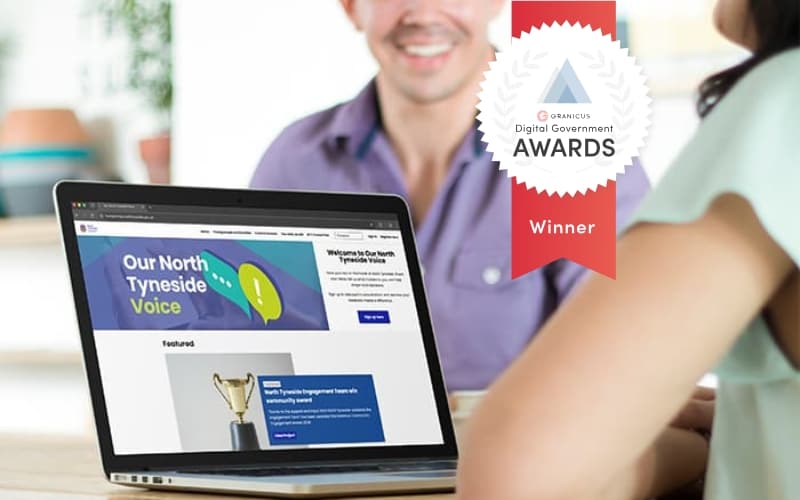
By introducing its Our North Tyneside Voice platform — powered by Granicus’ Sentiment & Feedback solution (EngagementHQ) — the organisation created one central hub for its consultation efforts, a home for all its surveys, hubs, newsletters, and feedback loops. While this shift improved the overall quality and coordination of engagement, it also helped to ensure that certain standards of accessibility — such as easy-read, audio, and BSL content — were automatically embedded within the engagement process.
Additionally, the introduction of this platform also allowed the council to achieve its goal of improving its demographic reach. “The range of digital tools within EngagementHQ has widened the ways residents can take part,” the team stated. “These include forums, question and answer tools, mapping features, idea boards, video explainers, and short polls. These options appeal to different groups and help make engagement more meaningful.”
These options weren’t something North Tyneside Council was able to find in other engagement solutions.
Today, the team are in agreement that “this project was vital in transforming how North Tyneside Council engages with residents, creating a single, accessible, and transparent approach to consultation across the organisation.” From increased participation to improved representation and strengthened trust, the Our North Tyneside Voice platform has created a measurable impact among both residents and on internal council operations.
Specifically, it has driven significant improvements in both the scale and inclusivity of engagement:
These figures demonstrate that North Tyneside has moved from merely executing consultation as a process to embedding engagement within its core operating model, using feedback to inform major policies — including its Resident Engagement Strategy 2026-2029. In turn, this progress has done much to create a more transparent, accountable, and inclusive relationship with each and every one of its residents. Today, it is an approach that is enabling:
“EngagementHQ provided the central structure that had been missing. It gave residents one clear place to visit for engagement and allowed the council to apply consistent standards across every project,” say the team, which meant finally “reaching those we had never reached before,” ensuring that all are connected with the wider circle of their community.
As the winners of our last two categories have demonstrated, internal operations can have a direct impact not just on organisational output, but on the total sum of resident experience. In our next two blogs, we’ll be meeting the winners of this year’s Operational Excellence category, exploring how they’ve enhanced their efficiency to better benefit not just their own organisations, but their wider communities.