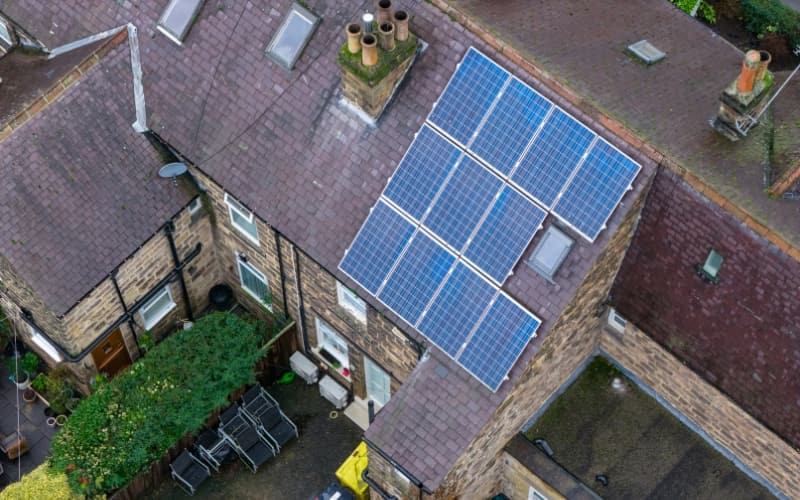
For millions across the UK, the cost-of-living crisis is most acutely felt through rising energy bills, which — month after month — place an ever-increasing strain on household budgets. For housing associations, the challenge is to provide tenants with actionable advice and support on how energy efficiency can not only help them but create a path to a more sustainable future. By thoughtfully communicating with their residents to promote energy efficient initiatives, housing associations can build a future where individual financial stability and sustainability are balanced in harmony.
Why energy efficiency matters now
For housing association tenants, the advantages of an energy efficient property are immediate and tangible. An energy efficient home is cheaper to run, thus freeing up disposable income that would otherwise be spent on high utility bills. For individual residents, this can mean the difference between easily balancing a household budget and falling into rent arrears. In addition to this, energy efficient homes are warmer and less prone to the risks associated with the presence of damp and mould, which carry their own remediation costs.
By understanding the benefits of these standards— and offering access to housing that adheres to the same — housing associations demonstrate a clear commitment to the health of their tenants in the widest possible sense, creating a bond of trust that nurtures the relationship between a social landlord and its residents. Furthermore, promoting and implementing energy efficiency helps housing associations future-proof their housing stock to ensure compliance with evolving government standards while increasing tenant satisfaction and well-being.
Strategies for promoting your programmes
Raise the profile of the initiatives your organisation offers by being strategic in capturing the attention of your residents, highlighting the benefits of energy efficiency to them and their household. To this end, consider the following tactics:
1. Use simple and straightforward language
Avoid technical jargon. For example, instead of talking about retrofit assessments or Energy Performance Certificate (EPC) ratings, focus on the outcomes (i.e., a warmer home or lower energy bills). Use simple and direct language that can be immediately understood by anyone — but especially your tenants. Rather than saying something like, “We’re offering a grant for external wall insulation,” try, “We can help you get a warmer home and lower your heating bills this winter for free.” Use your communications to highlight the benefits of energy efficiency rather than the methods used to deliver it.
2. Highlight tangible cost savings
Money matters, especially during a financial crisis. Lead your communications with concrete examples of how your energy initiatives could positively impact your residents’ finances. Wording such as, “Tenants who had this type of insulation installed saved an average of £250 a year on their energy bills,” gives readers a concrete idea of the savings to be had from the support you offer.
3. Leverage tenant success stories
Identify tenants who have benefited from your association’s energy initiatives and ask if they would be willing to share their experience of these with other residents. A short video testimonial, a quote in a newsletter, or a case study on your website can be incredibly persuasive and ultimately, far more convincing (and authentic) than any corporate message.
4. Segment your communications
As a housing association, you know that not all of your tenants have the same needs or live in the same type of property. Here, it pays to rely on your housing data to segment your audience and likewise, to tailor your messaging accordingly. Depending on how you choose to segment your data, this could mean identifying properties with the lowest energy performance ratings and targeting these residents with specific offers. By taking this approach, you ensure that your message is relevant and therefore, more likely to be acted upon.
Tools and resources to drive tenant engagement with energy efficiency
As a housing association, you can use a range of tools and resources to help make your initiatives more accessible to the tenants you serve. Consider using:
- Online energy calculators: Integrate a simple energy calculator into your association’s website. By inputting basic information about their home and energy use, these calculators allow tenants to receive insight as to the impact that various energy efficiency measures could have upon their household budgets.
- Grant finders and financial support hubs: The wider landscape of government grants and support schemes can be confusing, but by creating a dedicated section for energy efficiency on your website, you are offering your tenants a one-stop shop for financial help. Provide clear links to schemes like the Energy Company Obligation (ECO) or local council grants. By simplifying the process and putting all of these resources in one place, you are helping your tenants to overcome one of the major barriers in ensuring that their homes are energy efficient.
- Partnerships with local organisations: Collaborate with local charities, community groups, and energy advice services. These organisations often have deep-rooted trust within communities and can help to amplify and spread your message.
Get the complete crisis communication toolkit
For housing associations, the promotion of energy efficiency initiatives is a means of supporting tenants through the current cost-of-living crisis. With careful and considered communication, associations can connect residents with a range of helpful programmes, balancing the sustainability of tomorrow with the stability of today.
This guide offers a starting point for building your crisis strategy. For a more detailed framework — including ready-to-use email templates, checklists, and advanced communication strategies — download our complete Crisis Communications Workbook, a resource designed to provide housing associations with all the tools needed to connect with communities and deliver meaningful support when it matters most.